

By Dr. Itay Wiser, MD, PhD, Associate Clinical Professor of Surgery at Mount Sinai Elmhurst Hospital, fellowship-trained in aesthetic and reconstructive breast surgery at Lenox Hill Hospital. Medically reviewed September 2026.
Women remove their breast implants for four broad reasons: systemic symptoms they attribute to the implants (breast implant illness), a complication such as capsular contracture or rupture, a change in lifestyle or body, and a change in aesthetic preference. All four are legitimate, and none requires defending. Explant has become one of the most discussed procedures in breast surgery, and this article explains each reason, what it means for the operation, and whether insurance is likely to help.
1. Breast implant illness symptoms
Fatigue, joint and muscle pain, brain fog, hair loss, rashes and other systemic symptoms that some women attribute to their implants. The FDA lists systemic symptoms among reported implant risks, and research shows that a majority of women who explant for these symptoms improve, though not all do. Because the symptoms overlap with many conditions, evaluation comes first. Read the full breast implant illness guide for the symptoms, the evidence and the decision.
2. Capsular contracture and rupture
Every implant develops a scar-tissue capsule; in some women it tightens, hardens and distorts the breast, graded Baker I (soft) to IV (hard, painful, misshapen). Rupture is the other mechanical reason: a saline implant deflates visibly, a silicone implant can leak silently, which is why the FDA recommends periodic imaging. Both are medical indications, usually covered by insurance, and both often call for capsule removal along with the implant; see en bloc capsulectomy explained for how the techniques differ.
3. Lifestyle change
Implants chosen at 25 can feel wrong at 45. Women describe implants that are too large for running or yoga, uncomfortable to sleep on, out of proportion after weight loss or menopause, or simply no longer part of how they want to look. Removal for this reason is self-pay, and the consultation focuses on the aesthetic result afterward.
4. Aesthetic preference
A wish for a natural, smaller breast without a device. Depending on skin and tissue, the breast may settle well on its own, or a lift or fat transfer restores shape and modest volume without a new implant. The article what your breasts will look like after explant has the decision table.
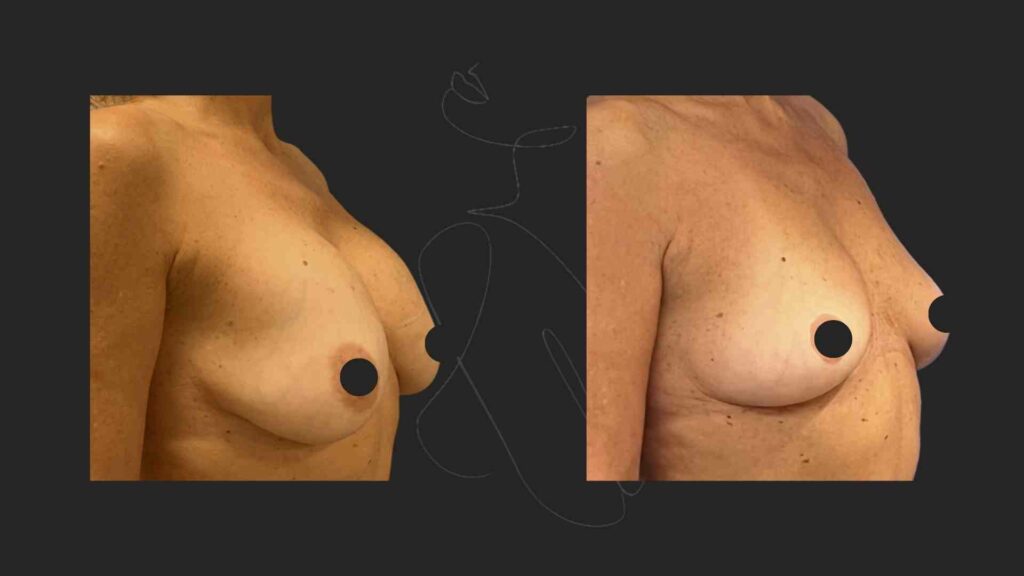
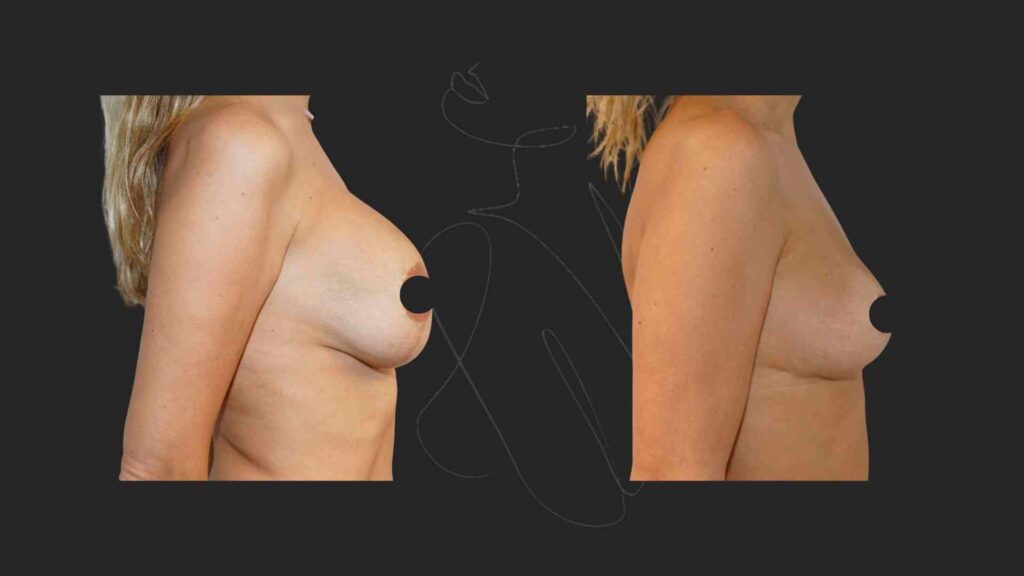
The trend in 2026
Explant has moved from a niche revision to a mainstream choice. Several forces drive it: greater awareness of implant risks after the FDA's boxed warning and patient decision checklist, the recall of certain textured implants associated with BIA-ALCL, wide discussion of breast implant illness, and a broader shift toward natural results. The American Society of Plastic Surgeons publishes annual procedural statistics for readers who want the numbers; the practice's own experience is that removal without replacement, alone or with a lift, is now requested as often as exchange.
What your reason means for the operation
| Your reason | Likely operation | Insurance |
|---|---|---|
| BII symptoms, no other finding | Removal, capsulectomy by indication; lift or fat transfer optional | Usually not covered for symptoms alone |
| Rupture or Baker III to IV contracture | Removal with total or en bloc capsulectomy; pathology | Often covered as medically necessary |
| Lifestyle change | Removal alone, or with lift | Usually self-pay; depends on your plan |
| Aesthetic preference | Removal with lift or fat transfer, or exchange to a smaller implant | Usually self-pay; depends on your plan |
| Reconstruction implants after mastectomy | Removal, exchange or conversion to a flap | Covered under federal law (WHCRA) |
Whatever the reason, the breast implant removal (explant) in NYC page explains the options, recovery and how the practice coordinates insurance.
Frequently asked questions
How long do breast implants last?
There is no fixed lifespan. Implants are not lifetime devices; many last well over a decade, and the chance of rupture, contracture or a change of mind rises the longer they are in. The FDA recommends periodic imaging of silicone implants to detect silent rupture.
Is it normal to want implants removed without any complication?
Yes. Preference and lifestyle are among the most common reasons for explant and need no medical justification. The consultation focuses on what you want your breasts to look like afterward.
Can I replace my implants instead of removing them?
Yes. Exchange for a different size or type, or removal with a lift or fat transfer, are all options. The choice depends on why the implants are coming out and what you want next.
Which reasons are covered by insurance?
Documented complications: rupture, severe capsular contracture, infection, BIA-ALCL, and reconstruction-related removal under federal law. Preference and BII symptoms alone are usually not covered.
Your reason is enough
At the free virtual consultation Dr. Wiser listens to why you want your implants out, examines and images them if needed, and explains the removal option and aftermath that fit. No reason needs justifying.
About the author. Dr. Itay Wiser, MD, PhD is Associate Clinical Professor of Surgery at Mount Sinai Elmhurst Hospital. He completed a reconstructive microsurgery fellowship in aesthetic and reconstructive breast surgery at Lenox Hill Hospital and a lymphedema surgery fellowship at Memorial Sloan Kettering Cancer Center, and holds a PhD in epidemiology and public health. He practices at 535 Fifth Avenue in Manhattan.
Medical disclaimer: This article is for general education and does not replace an individual consultation. Recovery times are typical ranges and insurance criteria vary by plan.