

Breast Reduction in NYC: Relief, Shape & Insurance Coverage
Insurance Accepted
1000+ procedures
200+ Google Reviews
By Dr. Itay Wiser, MD, PhD, Associate Clinical Professor of Surgery at Mount Sinai Elmhurst Hospital, fellowship-trained in aesthetic and reconstructive breast surgery at Lenox Hill Hospital. Medically reviewed September 2026.
Breast reduction (reduction mammaplasty) removes excess breast tissue, fat and skin, then reshapes and lifts the breast so it sits in proportion with your frame. It is the one breast procedure most often performed for medical reasons: chronic neck, back and shoulder pain, grooves from bra straps, rashes in the breast fold and difficulty exercising. Because those reasons are medical, insurance frequently covers it. Dr. Itay Wiser performs breast reduction in NYC at his Fifth Avenue practice and coordinates the insurance approval for you.
Is breast reduction right for you? Start with your symptoms
Women rarely arrive at this page because of how their breasts look. They arrive because of how their breasts feel. If several of the following describe your daily life, you are the patient this procedure was designed for:
- Neck, upper back or shoulder pain that eases when you lie down or hold your breasts up.
- Indentations or grooves on your shoulders from bra straps.
- Rashes, chafing or recurrent skin irritation under the breasts, especially in summer.
- Numbness or tingling in the hands or arms after long days on your feet.
- Difficulty running, doing yoga or exercising without two sports bras.
- Breasts that feel too large inside a bra, or that differ noticeably in size from each other.
- Clothing that fits at the bust but nowhere else.
Many patients also notice that they look thinner after a breast reduction because their proportions change, even though their weight does not. If you are still deciding between a reduction, a lift or another procedure, the complete guide to breast surgery in NYC compares every option side by side. Read what patients report in is a breast reduction worth it?
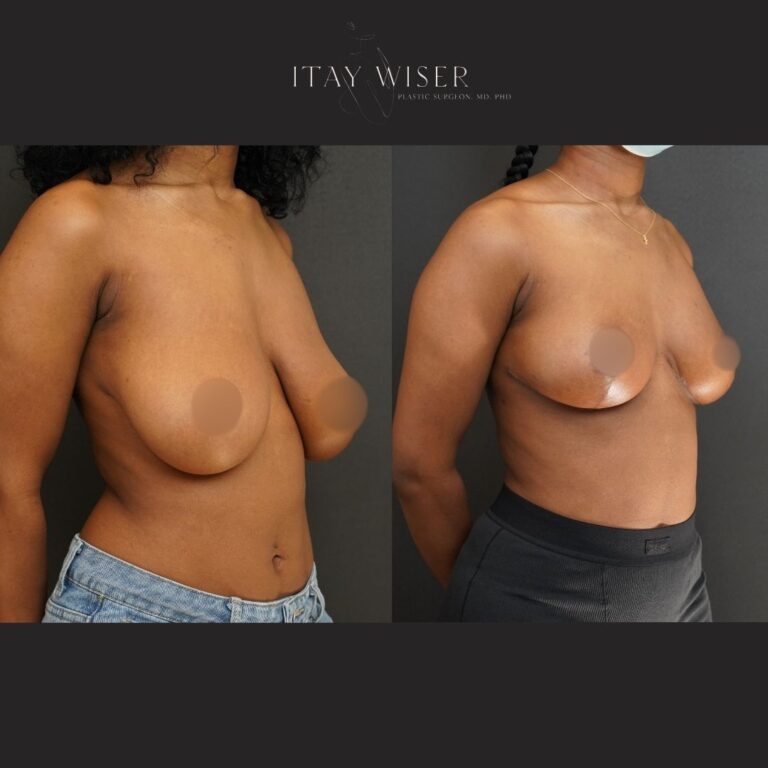
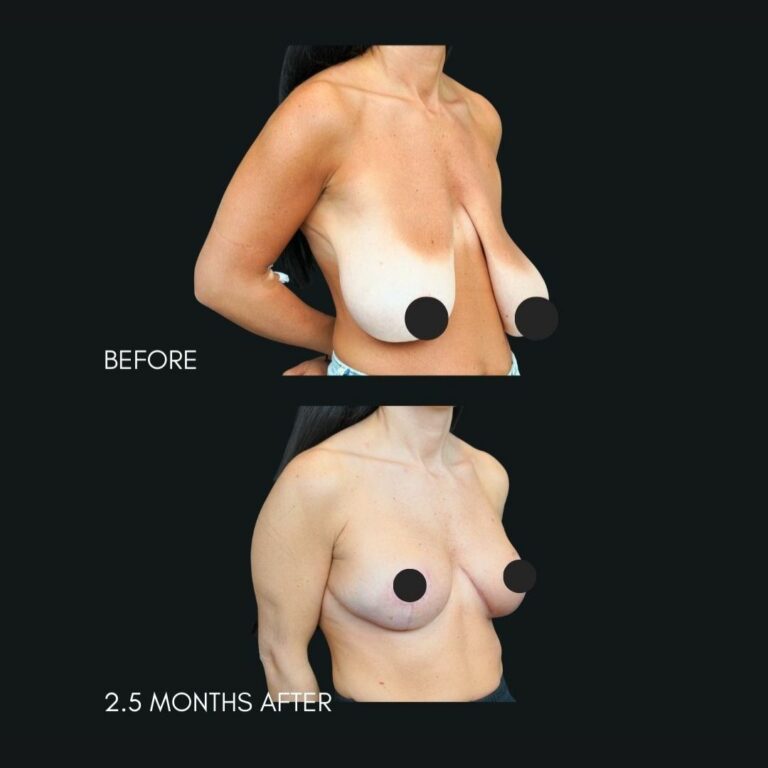
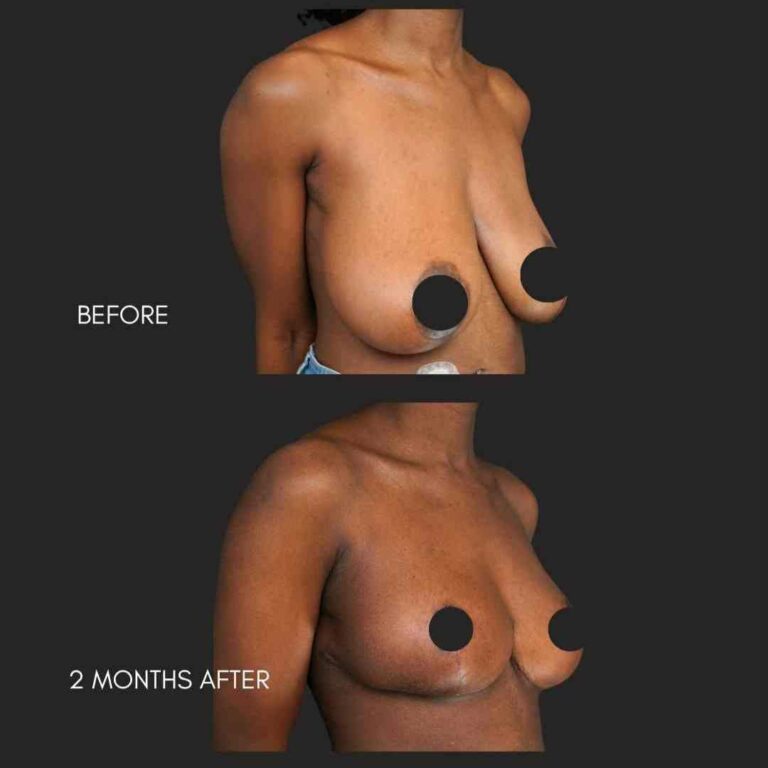
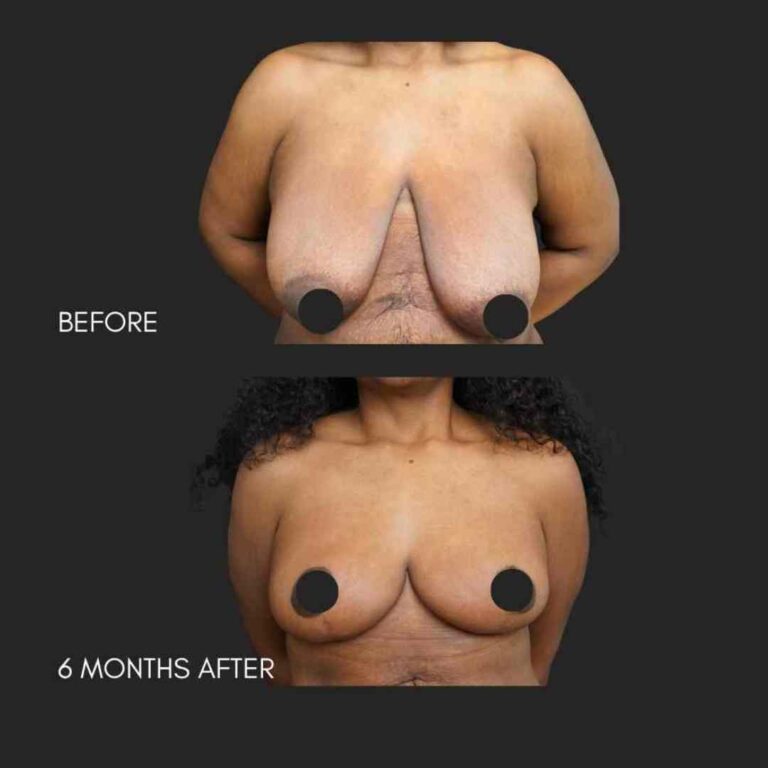
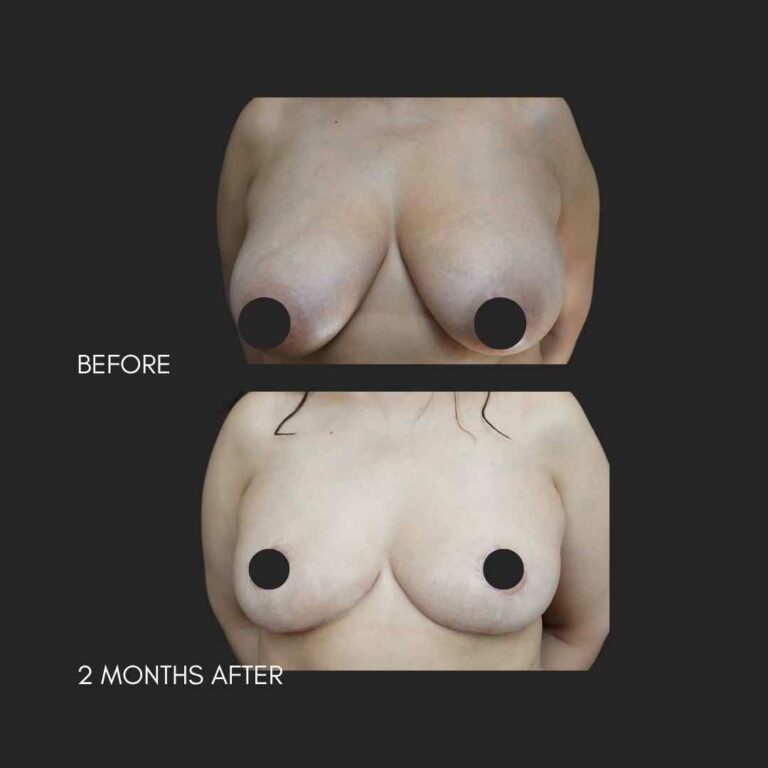
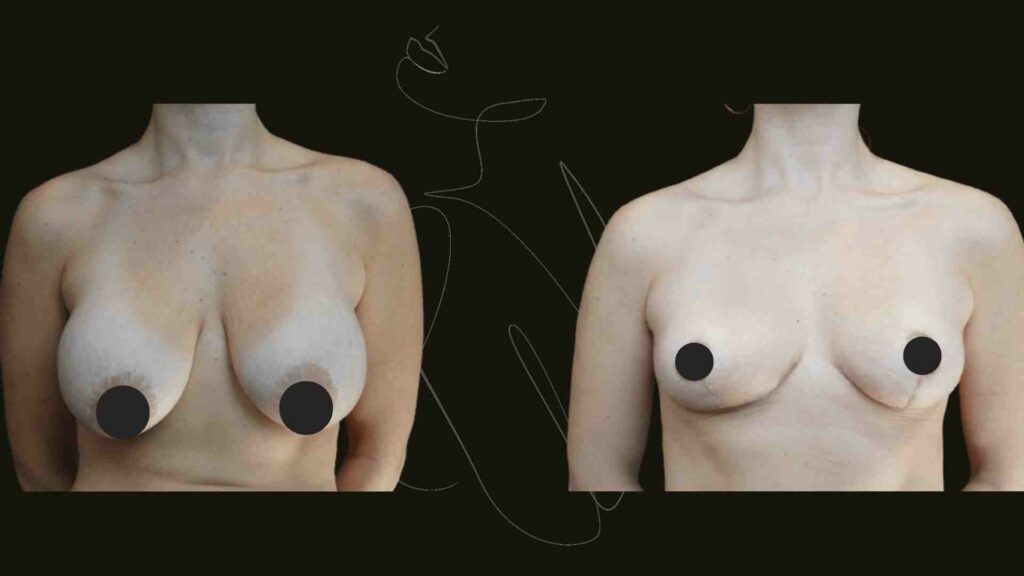
Breast Reduction NYC - Before & After
Find Out If Your Insurance Covers It — Free
Aetna
Cigna
Anthem
UMR
Horizon
and more
Please note: We DO NOT accept Affinity Health Plan, EmblemHealth (HIP), Empire BlueCross BlueShield Health Plus, or Fidelis Care New York. Out-of-pocket payment and flexible financing options are available. Call 347-947-5734.
- We handle all paperwork and verify your coverage.
- HIPAA-compliant — your info is safe.
- We work with Aetna, Cigna, BCBS, UHC, Anthem and more
- Our team handles all paperwork — you focus on recovery.
- No obligation — just clear answers.
How the Insurance Process Works
Our team handles everything.
Book a Free Call with Our Medical Coordinator
Schedule a free Zoom call. We walk through your situation, answer your questions, and explain what to expect.
We Verify Your Insurance & Schedule a Doctor Call
If your provider is in our network, we set up a consultation call with the doctor — at no cost to you.
We Handle All the Documentation
Our team prepares and submits all required medical paperwork to your insurance provider for approval.
What insurers look for before approving breast reduction
Insurance decisions are made on documentation, so it helps to know what the file needs to contain. Plans differ, but most New York policies look for the same four things:
- Documented symptoms over time. Notes from your primary care doctor, chiropractor, physical therapist or dermatologist recording neck, back or shoulder pain, grooving or skin problems, usually across several months.
- Conservative treatment tried first. Supportive bras, physical therapy, anti-inflammatory medication, weight management or dermatologic treatment, with dates.
- An estimated tissue weight that meets the plan's threshold. Many insurers reference the Schnur Sliding Scale, which sets a minimum removal weight per breast based on your body surface area (height and weight). Dr. Wiser makes this estimate at your consultation.
- Photographs and a surgeon's letter of medical necessity. The practice prepares both.
If you want to read a real policy, Aetna publishes its criteria in Clinical Policy Bulletin 0017. It is a useful example of how insurers think, and it also notes that the Schnur scale's own author later questioned its use for coverage decisions, which is why symptoms and conservative treatment matter as much as grams. Your plan's policy controls the final decision.
Before any covered procedure is scheduled, Dr. Wiser's team verifies your benefits, assembles the documentation and submits the pre-authorization request, so you know where you stand before you commit. The practice does not accept Affinity Health Plan, EmblemHealth (HIP), Empire BlueCross BlueShield Health Plus or Fidelis Care New York; self-pay pricing and financing are available for those plans and for patients whose policy excludes reduction. The full guide answers does insurance cover breast reduction in NY in detail.

About Dr. Itay Wiser
Associate Clinical Professor of Surgery, Mount Sinai Elmhurst
PhD Public Health
Specialized in Breast Surgery
Dr. Itay Wiser is Associate Clinical Professor of Surgery at Mount Sinai Elmhurst Hospital. He completed a reconstructive microsurgery fellowship in aesthetic and reconstructive breast surgery at Lenox Hill Hospital and a lymphedema surgery fellowship at Memorial Sloan Kettering Cancer Center, and holds a PhD in epidemiology and public health. Breast reduction is one of the procedures he performs most often, and his team manages the insurance process from verification through approval.
What breast reduction changes
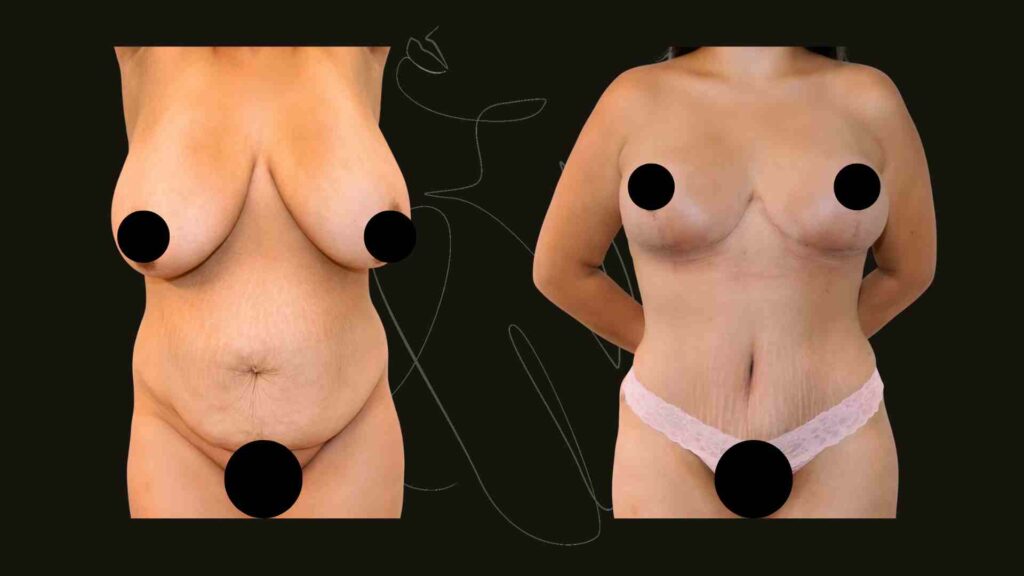
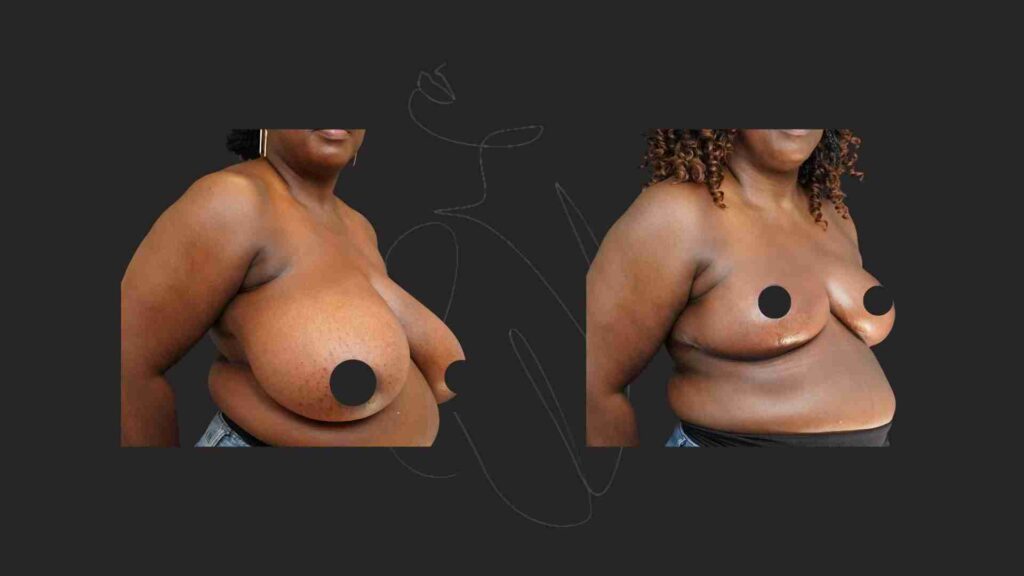
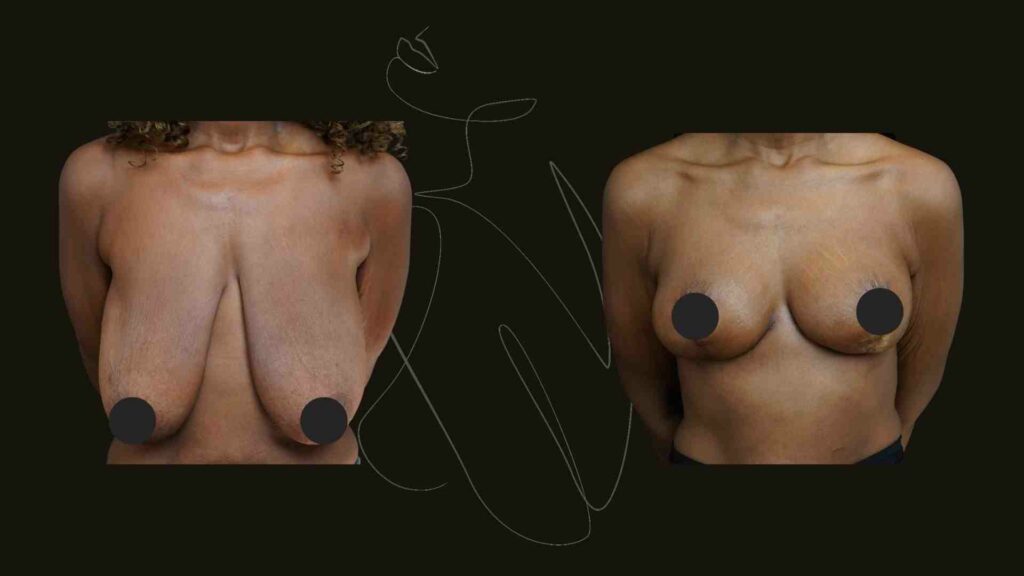
The operation does three things at once. It removes the excess tissue that causes weight and pain, it lifts the nipple and areola to a natural position, and it reshapes the remaining breast so the result is smaller, lighter and proportionate. Patients most often report relief of neck, back and shoulder pain, an end to strap grooving and skin irritation, easier exercise, and clothes that finally fit. Dr. Wiser can also correct a size difference between the breasts during the same operation.
Breast reduction or breast lift: which one do you need?
The two procedures share incisions and are often confused. A reduction removes volume and lifts. A breast lift (mastopexy) lifts and reshapes without removing much volume. Dr. Wiser's rule of thumb is simple: if the breast feels too large inside a bra, or causes heaviness, pain or skin problems, you need a reduction. If you are happy with the volume in a bra but the breast is droopy, you are probably a lift candidate. Because every reduction includes a lift, you do not need to choose both.
Techniques and where the scars go
Dr. Wiser uses two incision patterns for breast reduction and chooses the least extensive one that can safely achieve your result.
- Lollipop (vertical) reduction. An incision around the areola plus a vertical line from the areola to the breast fold. Suited to moderate reductions where the skin still has good elasticity; the scar footprint is smaller and there is no scar along the fold.
- Anchor (inverted-T) reduction. The lollipop pattern plus a horizontal incision along the breast fold. Used when a large amount of tissue and skin must be removed or when the breast sits very low; it gives the surgeon the most control over shape. The fold scar is hidden in the crease but is longer.
All stitches are internal and dissolvable, so nothing needs to be removed. Read more about breast reduction scars; they are most visible in the first months and continue to fade over the first year and beyond; Dr. Wiser reviews your skin type at the consultation and tells you honestly what to expect. Combining a reduction with a tummy tuck or liposuction as part of a mommy makeover in NYC is common when the breasts and abdomen have both changed after pregnancy.
Pain control during and after surgery
Most patients describe mild to moderate discomfort in the first few days. To reduce it, Dr. Wiser performs a regional nerve block during surgery that temporarily numbs the surgical area. The practice reports that this keeps discomfort noticeably lower for the first one to two days, when pain is usually at its peak, and that patients who receive the block rely less on prescription pain medication. The article is breast reduction painful? goes into more detail.
Recovery after breast reduction, week by week
Recovery is faster than most patients expect, and the relief from pain and heaviness is often immediate. The timeline below reflects the practice's typical guidance; your surgeon adjusts it to your case.
| Timeframe | What to expect | What you can do |
|---|---|---|
| Day of surgery | Outpatient procedure of two to four hours under general anesthesia. You go home the same day in a surgical bra. | Rest. Out-of-town patients are advised to stay overnight in NYC for easy follow-up. |
| Days 1 to 3 | Nerve block wears off; mild to moderate soreness managed with medication. Swelling and bruising begin. | Short walks around the home. Sleep on your back with your head and shoulders propped on pillows. |
| Week 1 | Soreness settles into tightness. First follow-up visit. | Light daily activities. Showering per your instructions. No lifting. |
| Weeks 2 to 3 | Most swelling and bruising fade. Desk work is usually comfortable. | Return to desk work and driving once off prescription pain medication. Continue wearing the support bra. |
| Weeks 4 to 6 | Incisions are healed; the breast shape begins to settle. | Gradual return to exercise, upper-body training last. Support bra worn through week four. |
| Months 3 to 12 | Final shape and softness develop; scars flatten and fade. | Scar care as directed. Annual follow-up. |
Typical ranges reported by the practice, not guarantees. Recovery timelines vary depending on the patient, the procedure and individual healing. Individual recovery depends on the extent of surgery, your health and how closely you follow aftercare instructions.
Preparation shapes recovery as much as the operation does. The American Society of Plastic Surgeons advises stopping smoking at least a month before and after surgery, because nicotine restricts blood flow to healing tissue. Arrange help at home for the first few days, fill prescriptions in advance, and ask the practice about hyperbaric oxygen therapy, which it offers to support healing.
Breast reduction after major weight loss
Losing a significant amount of weight, whether through GLP-1 medication, bariatric surgery or diet, changes the breast in a specific way: fatty volume disappears while the stretched skin does not fully retract. Some patients still have heavy, symptomatic breasts and need a true reduction; others are left with deflated, low breasts and are better served by a lift. Dr. Wiser examines how much tissue remains and tells you which applies. Either way, surgery should wait until your weight has been stable for several months, because further loss after surgery changes the result. His surgical weight optimization program helps patients on GLP-1 medications or recovering from bariatric surgery reach that point safely, and breast surgery is often staged with body contouring after weight loss.
Breast reduction in Manhattan: the practice
Dr. Wiser sees patients at 535 Fifth Avenue, 32nd Floor, in Midtown Manhattan, a few blocks from Grand Central Terminal and reachable from the Upper East Side, Brooklyn, Queens, New Jersey and Westchester by subway, Metro-North or car. Surgery is performed in an accredited operating facility. Consultations are available in person or by video, and out-of-town patients are advised to stay in the city the night after surgery for the first follow-up.
Phone: 347-947-5734. Address: 535 5th Ave, 32nd Floor, New York, NY 10017.
How much does breast reduction cost in NYC?
When insurance approves the procedure, your cost is your plan's deductible, copay and coinsurance. When it is self-pay, the total depends on the extent of tissue removal and reshaping, the surgical facility and anesthesia fees, and post-operative care. The practice gives a written, all-inclusive estimate at your consultation and offers financing. Call 347-947-5734 for a personalized estimate.
Breast Reduction NYC
Bra Size Calculator
Enter your measurements below to find your current bra size. Understanding your size is an important first step before your breast reduction consultation.
Band measurement
Wrap the tape snugly around your ribcage, directly under your bust. Keep it level and firm.
Bust measurement
Wrap the tape around the fullest part of your bust. Keep it parallel to the ground — do not compress.
Frequently asked questions about breast reduction in NYC
Does insurance cover breast reduction in New York?
Often, yes. Most plans treat breast reduction as medically necessary when you have documented symptoms such as neck, back or shoulder pain, bra-strap grooving or skin rashes, you have tried conservative measures first, and the estimated amount of tissue to be removed meets the plan's threshold. Dr. Wiser's team verifies your benefits and prepares the documentation before surgery is scheduled.
What size breasts qualify for a reduction?
There is no single cup size that qualifies. Insurers look at the estimated weight of tissue to be removed relative to your height and weight, along with your symptoms and what you have already tried. Dr. Wiser estimates the removal weight at your consultation and tells you plainly whether it is likely to meet your plan's criteria.
Do I need a breast reduction or just a breast lift?
In Dr. Wiser's words: in a breast reduction he reduces the volume of the breast and lifts the position of the nipple and areola; in a breast lift he only does the latter. If you suffer from heaviness, skin irritation in the breast folds, or shoulder, back or neck pain, or the breast feels too large inside the bra, you are a reduction candidate. If you are satisfied with the volume in a bra but the breast is droopy, you are probably a lift candidate.
How long does breast reduction surgery take?
The procedure typically takes two to four hours, depending on the amount of tissue removed and how much reshaping is involved. It is performed under general anesthesia and most patients go home the same day.
Is breast reduction surgery painful?
Most patients describe mild to moderate discomfort in the first few days. During surgery Dr. Wiser performs a regional nerve block that numbs the surgical area, which the practice reports reduces discomfort noticeably for the first one to two days, when pain is usually at its peak, and lowers the need for pain medication.
When can I return to work and exercise after breast reduction?
Most patients return to desk work in one to two weeks. A surgical or sports bra is worn for support during the first weeks, and strenuous exercise, including upper-body training, waits until four to six weeks. Swelling and bruising usually settle over the first one to two weeks.
Will breast reduction affect my ability to breastfeed?
Dr. Wiser uses techniques designed to preserve the connection between the nipple and the milk ducts whenever the anatomy allows, so future breastfeeding remains possible for many patients. The larger the reduction, the greater the chance that some milk-producing tissue is removed, so raise this at your consultation if it matters to you.
Are breast reduction results permanent?
The tissue that is removed does not grow back, so the reduction itself is lasting. Aging, pregnancy and significant weight change can still alter breast shape and volume over time, which is why Dr. Wiser recommends reaching a stable weight before surgery.
Find out if your insurance covers breast reduction
Book a free virtual consultation. You share your symptoms, a few photographs and your insurance details; Dr. Wiser examines your anatomy and estimates the tissue removal; and his team checks your benefits and tells you whether coverage is likely before you commit to anything.
About the author. Dr. Itay Wiser, MD, PhD is Associate Clinical Professor of Surgery at Mount Sinai Elmhurst Hospital. He completed a reconstructive microsurgery fellowship in aesthetic and reconstructive breast surgery at Lenox Hill Hospital and a lymphedema surgery fellowship at Memorial Sloan Kettering Cancer Center, and holds a PhD in epidemiology and public health. He practices at 535 Fifth Avenue in Manhattan.
Medical disclaimer: This page is for general education and does not replace an individual consultation. Recovery times are typical ranges and insurance criteria vary by plan.