

Breast Augmentation in NYC: Implants, Sizing & Natural Options
By Dr. Itay Wiser, MD, PhD, Associate Clinical Professor of Surgery at Mount Sinai Elmhurst Hospital, fellowship-trained in aesthetic and reconstructive breast surgery at Lenox Hill Hospital. Medically reviewed September 2026.
Breast augmentation adds volume and fullness with a saline or silicone implant, or with your own fat transferred from another area. The result should look like your breasts, only fuller: proportionate to your chest width, soft, and without an obvious upper edge. Dr. Itay Wiser performs breast augmentation in NYC with implants of every current type and with fat transfer, and combines augmentation with a lift when the breast has dropped as well as lost volume.
Is breast augmentation right for you?
- You want more fullness, especially in the upper breast, and your nipple position is fine.
- Your breasts lost volume after pregnancy, breastfeeding or weight loss but did not drop much.
- One breast is noticeably smaller than the other.
- You want a natural increase of a cup or so and prefer no device (fat transfer).
If your nipples point downward or sit at the fold, position is part of the problem and a breast lift in NYC alone or with implants is the better answer; the article breast lift vs augmentation explains how to tell. The complete guide to breast surgery in NYC compares every option.
Table of Contents
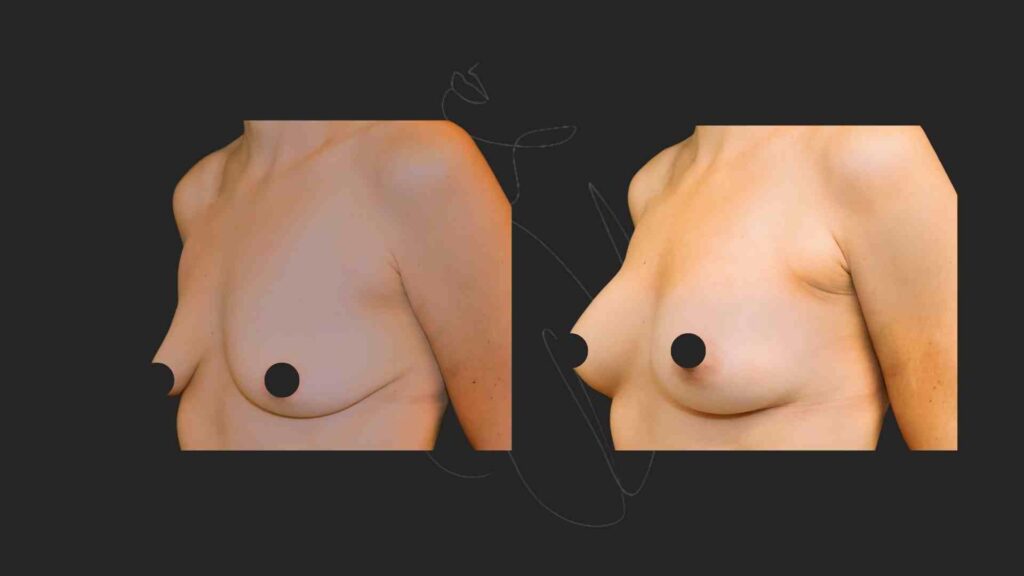
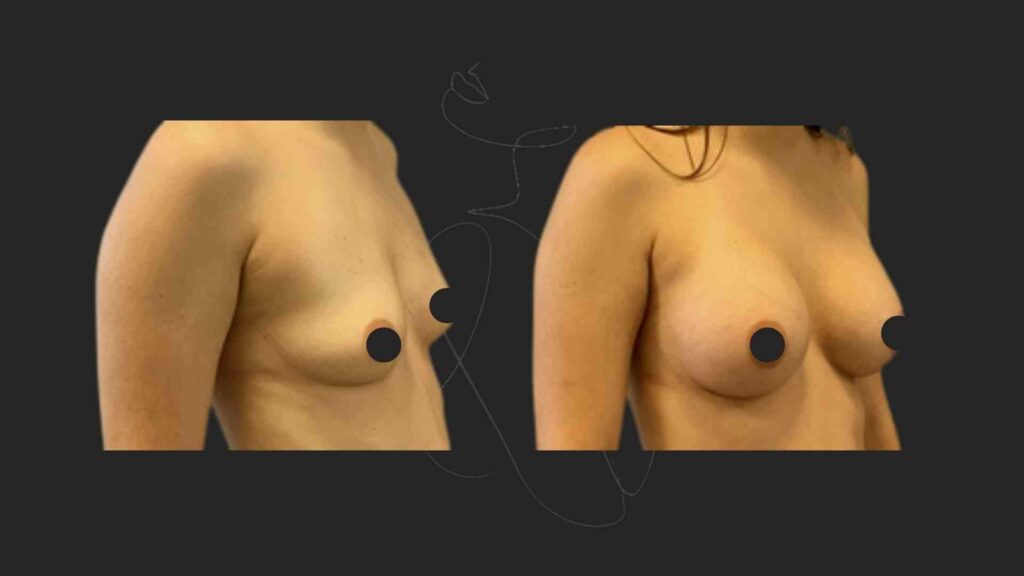
Breast Augmentation: Before & After


Why Patients Trust Dr. Wiser

Associate Clinical Professor of Surgery, Mount Sinai Elmhurst

Thousands of successful
procedures

Advanced techniques for natural-looking results
Breast implant types compared
| Type | Feel | Incision | If it leaks | Notes |
|---|---|---|---|---|
| Silicone gel | Closest to natural tissue; ripples less | Slightly longer, usually in the fold | Gel stays in the capsule; silent rupture possible, so periodic imaging is recommended | Most common choice for feel |
| Highly cohesive silicone (gummy bear) | Firmer; holds shape | Similar to silicone | Gel holds together | Available in round and shaped forms |
| Saline | Firmer; more likely to ripple in thin patients | Smaller; filled after placement | Obvious deflation; saline is absorbed harmlessly | Adjustable fill can help with asymmetry |
| Fat transfer (no implant) | Your own tissue | Small liposuction access points only | Not applicable | Modest increase; some fat does not survive |
Implants are regulated medical devices. Read the FDA's breast implant information linked below before you decide.
The article breast implant types goes deeper on each option and on profile and shape. The FDA's breast implant page explains the risks, the recommended imaging schedule for silicone implants and the fact that implants are not lifetime devices.
Sizing: how Dr. Wiser approaches it
Implant size is measured in cubic centimeters and fitted to your anatomy: the width of your chest, the amount of breast tissue you have, and the quality of your skin. The natural-results approach means choosing the largest implant your tissue can carry gracefully, and no larger; an implant wider than your chest wall is what produces the visible edge and the side-fullness patients later regret. At the consultation you try sizers in a bra so the decision is made on your frame, in a mirror, with cup-size language used only as a rough guide.
Placement and incision options
- Under the muscle (submuscular or dual plane). More tissue covering the implant, a softer upper edge, and less interference with mammograms. Sorer for the first few days. Dr. Wiser's usual choice for patients with little natural tissue.
- Over the muscle (subglandular). Faster early recovery and a more direct effect on shape; suited to patients with enough natural tissue to cover the implant.
- Inframammary incision. In the fold under the breast; the most common and most versatile, with the scar hidden in the crease.
- Periareolar incision. Around the lower edge of the areola; useful when a lift is combined.
Fat transfer breast augmentation
For patients who want a natural, modest increase and no device, fat transfer takes fat by liposuction from the abdomen, flanks or thighs, purifies it and injects it into the breast. The increase is usually half a cup to a cup, some of the fat does not survive so results are more conservative than implants, and a second session is sometimes needed. The trade is no implant to monitor or replace. Read fat transfer breast augmentation and, if you are considering it, the guide to preparing for fat grafting surgery.
Breast implant longevity and replacement
Implants are not lifetime devices. Many last well over a decade, but rupture, capsular contracture (the scar capsule tightening around the implant) and changing preferences mean many patients will have another operation at some point. Some later choose breast implant removal, often with a lift. Dr. Wiser raises this at the first consultation because a decision about implants is a decision about the next twenty years.
Combining augmentation with other procedures
Augmentation is often combined with a lift when the breast has both deflated and dropped, and with a tummy tuck or liposuction after pregnancy as a mommy makeover in NYC. Combining procedures means one anesthesia and one recovery, and Dr. Wiser recommends it when your health and recovery support make it the safer overall choice.
Surgery day and recovery
Breast augmentation is an outpatient procedure under general anesthesia, typically one to two hours. Dr. Wiser performs a regional nerve block during surgery to keep early discomfort low.
| Timeframe | What to expect | What you can do |
|---|---|---|
| Days 1 to 3 | Tightness and soreness, more with under-muscle placement; swelling begins | Rest, short walks, sleep on your back propped up |
| Week 1 | Swelling settles; first follow-up | Return to desk work toward the end of the week |
| Weeks 2 to 4 | Implants begin to settle into position | Light activity; support bra worn continuously through week four |
| Weeks 4 to 6 | Incisions healed | Return to exercise, chest work last |
| Months 3 to 6 | Final position and softness | Routine follow-up; imaging schedule for silicone implants per FDA guidance |
Typical ranges reported by the practice, not guarantees. Recovery timelines vary depending on the patient, the procedure and individual healing.
Breast augmentation cost in NYC
Augmentation is usually considered cosmetic and paid for directly; every case is unique, and our team checks your plan. The total depends on implant type, whether a lift or fat transfer is included, facility and anesthesia fees and follow-up care. The practice provides a written, all-inclusive estimate at the consultation and offers financing. The American Society of Plastic Surgeons' breast augmentation overview describes the procedure in general terms.
Breast augmentation in Manhattan
Dr. Wiser sees patients at 535 Fifth Avenue, 32nd Floor, in Midtown Manhattan. Consultations are available in person or by video. Phone: 347-947-5734.
Frequently asked questions about breast augmentation in NYC
Silicone or saline implants: which is better?
Neither is better for everyone. Silicone gel implants feel closer to natural breast tissue and ripple less; saline implants can be placed through a smaller incision and a leak is obvious because the saline is absorbed. Most of Dr. Wiser's augmentation patients choose silicone for feel; the implant types guide compares them in detail.
How do I choose an implant size?
Size is chosen in cubic centimeters, not cup sizes, and is fitted to the width of your chest and the amount of tissue you have. Dr. Wiser uses measurements and sizers at the consultation so you can see and feel the difference between options on your own frame.
How long do breast implants last?
Breast implants are not lifetime devices. Many last well over a decade, but the longer you have them the more likely you are to need revision or replacement for rupture, capsular contracture or changing preferences. The FDA recommends periodic imaging of silicone implants to check for silent rupture.
Is fat transfer a real alternative to implants?
For a modest increase of roughly half a cup to a cup, yes. Fat is taken by liposuction from another area, purified and injected into the breast. A portion of the fat does not survive, so results are more conservative than implants and may need a second session, but there is no device to maintain.
Where are the incisions for breast augmentation?
Most commonly in the fold under the breast (inframammary), where the scar sits in the crease. Around the lower edge of the areola is an alternative. Fat transfer uses only small liposuction access points.
What is recovery like after breast augmentation?
Most patients return to desk work in about a week and to exercise at four to six weeks, chest work last. A support bra is worn for the first four weeks. Implants placed under the muscle are sorer for the first few days and settle into position over several weeks.
Try sizes on your own frame
The free virtual consultation is where implant type, size and placement, or fat transfer, get decided for your anatomy. Compare healed results in the before-and-after gallery.
About the author. Dr. Itay Wiser, MD, PhD is Associate Clinical Professor of Surgery at Mount Sinai Elmhurst Hospital. He completed a reconstructive microsurgery fellowship in aesthetic and reconstructive breast surgery at Lenox Hill Hospital and a lymphedema surgery fellowship at Memorial Sloan Kettering Cancer Center, and holds a PhD in epidemiology and public health. He practices at 535 Fifth Avenue in Manhattan.
Medical disclaimer: This article is for general education and does not replace an individual consultation. Recovery times are typical ranges and insurance criteria vary by plan.