
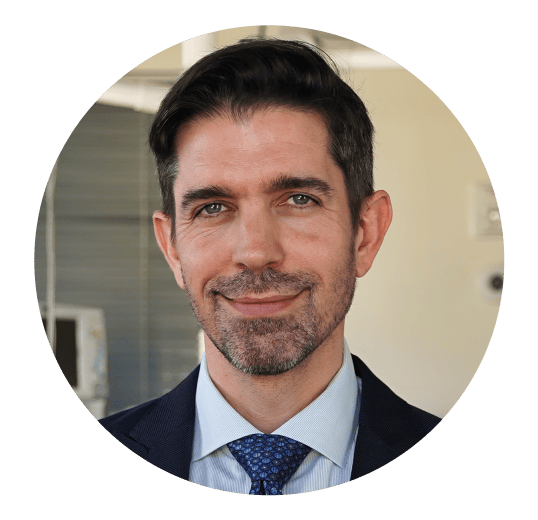
By Dr. Itay Wiser, MD, PhD, Associate Clinical Professor of Surgery at Mount Sinai Elmhurst Hospital, fellowship-trained in aesthetic and reconstructive breast surgery at Lenox Hill Hospital. Medically reviewed September 2026.
Every question women ask about a mommy makeover, answered plainly by the surgeon who performs them. The answers are grouped by theme; each links to a page with the full detail. For the overview, start with the complete mommy makeover guide.
Candidacy and timing
What is a mommy makeover?
A mommy makeover is your combination of procedures that address what pregnancy and breastfeeding changed, most often a tummy tuck with muscle repair, a breast lift or augmentation, and liposuction, done in one operation or two planned stages. It is planned around your body and your goals, not sold as a fixed package.
Who is a good candidate for a mommy makeover?
A woman who is done having children or not planning a pregnancy soon, whose body has recovered from pregnancy and breastfeeding, at a stable weight, in good health, a non-smoker, and with help arranged at home for the first weeks. What changed for you decides which procedures are combined, and Dr. Wiser confirms the timing.
Can I have a mommy makeover if I plan another pregnancy?
You can, but another pregnancy stretches the repaired muscles and the skin again, and the result may need revision. Most surgeons, Dr. Wiser included, recommend waiting until your family is complete.
More on timing: how long after pregnancy should you wait.

Breast Augmentation or Lift:
To restore volume or lift sagging breasts.
Tummy Tuck (Abdominoplasty):
To remove excess skin and tighten abdominal muscles.
Liposuction:
To remove stubborn fat deposits and improve body contour.
Breast Reduction:
To reduce the size and weight of breasts, alleviating discomfort.
Safety and the operation
Is it safe to combine a tummy tuck and breast surgery?
For healthy patients within the safety criteria (body mass index in range, operating time within the limit, a clear health screening), yes. Outside those criteria, two staged operations are the responsible plan. Dr. Wiser makes that call at the consultation, using the standards of hospital practice.
How long does the surgery take?
A combined mommy makeover typically takes four to six hours under general anesthesia, depending on the procedures. Patients usually stay one night.
What are the risks of a mommy makeover?
The risks of any surgery: infection, bleeding, poor wound healing, scarring, changes in skin or nipple sensation, blood clots, and anesthesia reactions. A combined operation carries them for longer, which is why the safety criteria exist. Dr. Wiser reviews your personal risk at the consultation and tells you plainly if staging is safer.
Cost and insurance
What does a mommy makeover cost in NYC?
It depends on the combination, single session or staged, and facility and anesthesia time. The practice provides a written, all-inclusive estimate and offers financing; the cost guide explains what moves the number.
Does insurance cover any part of it?
Some components of a mommy makeover may be covered in many cases, depending on your plan and your individual case: for example a breast reduction that meets your plan's criteria, removal of an overhanging apron, or a hernia repair. We're here to make the process easier. Our team can help answer insurance questions, take care of the necessary paperwork, and discuss available financing options to help make your procedure more accessible.
More: mommy makeover cost in NYC and diastasis recti repair.
Recovery and scars
How long is recovery, and can I lift my toddler?
Plan for help at home for the first weeks. Avoid heavy lifting, including lifting a toddler, until Dr. Wiser clears you; he sets that timing for your procedure. Desk work and light activity return sooner, exercise later. Recovery timelines vary depending on the patient, the procedure and individual healing. The recovery guide has the week-by-week plan.
Will I have scars?
Yes. A tummy tuck leaves a low horizontal scar hidden by underwear; a lift leaves a scar around the areola and usually a vertical line; augmentation leaves a short scar in the breast fold; liposuction leaves tiny access points. All fade over one to two years.
More: mommy makeover recovery with kids at home.
Results and practical questions
How long do results last?
The removed skin and repaired muscles are lasting. Weight change, aging and another pregnancy still act on the body, which is why weight stability and a complete family are part of candidacy.
Can I breastfeed after a breast lift or augmentation?
Often, yes; techniques that preserve the milk ducts are used where the anatomy allows. Raise it at the consultation if it matters to you.
What is diastasis recti and does the surgery fix it?
Separation of the two vertical abdominal muscles after pregnancy. A tummy tuck repairs it by stitching the muscles back together, which flattens and strengthens the core; crunches cannot close a separation.
What are the main benefits of a mommy makeover?
Function as much as appearance: a core that holds after the separated muscles are repaired, an end to chafing under loose skin, breasts that no longer pull on the shoulders, and a flatter abdomen and restored breast shape. The benefits article covers the functional side in detail.
How do I choose a surgeon for a mommy makeover?
Look for hospital privileges and experience with combined operations; ask how the surgeon decides between one session and staging; review before-and-after photos of combined cases; and notice if your questions are answered fully. Dr. Wiser is Associate Clinical Professor of Surgery at Mount Sinai Elmhurst Hospital and expects those questions.
More: benefits of a mommy makeover and mommy makeover for Queens and Elmhurst.
Have a question that is not here?
Ask it at the free virtual consultation. Dr. Wiser answers plainly, and the practice adds new questions to this page as women ask them.
About the author. Dr. Itay Wiser, MD, PhD is Associate Clinical Professor of Surgery at Mount Sinai Elmhurst Hospital. He completed a reconstructive microsurgery fellowship in aesthetic and reconstructive breast surgery at Lenox Hill Hospital and a lymphedema surgery fellowship at Memorial Sloan Kettering Cancer Center, and holds a PhD in epidemiology and public health. He practices at 535 Fifth Avenue in Manhattan.
Medical disclaimer: This page is for general education and does not replace an individual consultation. Recovery times are typical ranges and insurance criteria vary by plan.