
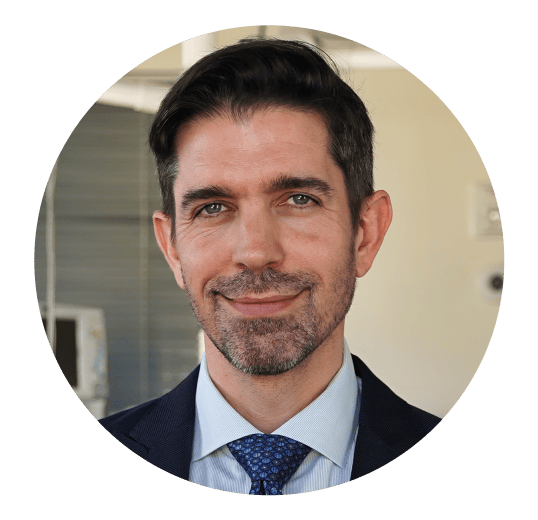
By Sarah Walner, PA-C, lead injector at WiserMD. Medically reviewed by Dr. Itay Wiser, October 2026.
Postpartum hair loss is common and, for most women, temporary. During pregnancy, high estrogen keeps hairs in the growth phase longer than usual; after delivery, estrogen falls and many of those hairs enter the resting phase together, then shed a few months later. Dermatologists call it excessive shedding (telogen effluvium) and note that it is not true hair loss (American Academy of Dermatology). Most women recover their usual fullness within about a year. Sarah Walner, PA-C explains when to wait and when treatment helps.
Why it happens
Hair grows in cycles: a long growth phase, a short transition, and a resting phase of about three months after which the hair falls out. Pregnancy hormones hold more hairs in the growth phase, which is why many women have thicker hair while pregnant. After birth, a large number move into the resting phase at once, and the shedding arrives about three months later, often all over the scalp. Cleveland Clinic's guide explains the cycle in more detail.
When to wait it out
If the shedding began two to four months after delivery, is spread across the scalp, and is gradually slowing, the most likely course is recovery on its own over the following months. Gentle care helps: avoid tight ponytails and heat styling, eat well, and give it time.
When PRP or PRF can help
Consider treatment when shedding has settled but density has not come back about a year after the birth, when thinning is concentrated along the part (which can signal female pattern hair loss revealed by the shedding), or when the thinning is affecting how you feel day to day. Sarah assesses the pattern and history first; see hair restoration for women in NYC.
When to see your physician
- Shedding that is still heavy many months after delivery.
- Patchy bald spots, which are not typical of postpartum shedding.
- Fatigue, feeling cold, or other symptoms that may point to thyroid changes, which are common after pregnancy.
- Signs of low iron, especially after a heavy blood loss at delivery.
Planning other changes after pregnancy
Many women who notice postpartum shedding are also thinking about other changes pregnancy brought. The mommy makeover guide covers body procedures, and how long after pregnancy to wait explains the timing; hair treatment can fit around both.
Questions about postpartum hair loss
When does postpartum hair loss start and stop?
It usually begins a few months after delivery and settles over the following months; most women see their hair return toward its usual fullness within about a year of the birth.
Is postpartum hair loss permanent?
Usually not. It is shedding of hairs that stayed in the growth phase during pregnancy. Some women find their density does not fully recover, especially if pattern thinning was already beginning, and that is when treatment helps.
Can I have PRP while breastfeeding?
This is discussed case by case. Many women wait until shedding settles anyway, because the first step is to see how much recovers on its own.
What can I do in the meantime?
Gentle hair care, avoiding tight hairstyles, a balanced diet, and checking iron and thyroid levels with your physician if shedding is heavy or lasts longer than expected.
Not sure if it is still settling?
At the free virtual consultation Sarah reviews the timing and pattern of your shedding and tells you whether to wait or whether treatment would help.
About the author. Sarah Walner, PA-C, joined WiserMD in 2024 after receiving her Master of Science in Physician Assistant Studies from Midwestern University. Before her physician assistant studies, she received her Bachelor of Science in Human Development from the University of Wisconsin-Madison. After becoming a certified physician assistant in 2024, Sarah began her career as a plastic surgery PA with Dr. Wiser. She has assisted in a wide range of cosmetic surgical procedures, including body contouring, breast surgery, facelift and blepharoplasty. Sarah is also the lead injector at WiserMD, specializing in natural, non-surgical facial rejuvenation with Botox, filler and microneedling. Every treatment plan is medically reviewed by Dr. Itay Wiser, Associate Clinical Professor of Surgery at Mount Sinai Elmhurst Hospital.
Medical disclaimer: This page is for general education and does not replace an individual consultation. Results and longevity vary by patient and product.