

By Dr. Itay Wiser, MD, PhD, Associate Clinical Professor of Surgery at Mount Sinai Elmhurst Hospital, fellowship-trained in aesthetic and reconstructive breast surgery at Lenox Hill Hospital. Medically reviewed September 2026.
Breast implants come in three practical types: silicone gel, highly cohesive silicone (gummy bear), and saline. They differ in how they feel, how they fail, and how they are monitored. There is no single type that suits everyone; the right one depends on your tissue, your priorities and your willingness to monitor a device over time. Below is the comparison Dr. Itay Wiser walks patients through at breast augmentation consultations in NYC, updated for 2026.
Implant types compared
| Silicone gel | Highly cohesive silicone (gummy bear) | Saline | |
|---|---|---|---|
| Feel | Closest to natural tissue | Firmer; holds shape | Firmer; can ripple in thin patients |
| Shapes | Round | Round and anatomical | Round |
| Incision | Slightly longer | Slightly longer | Smaller; filled after placement |
| If it ruptures | Gel may stay in the capsule (silent rupture); imaging recommended | Gel holds together | Deflates visibly; saline is absorbed |
| Monitoring | Periodic ultrasound or MRI per FDA guidance | Same as silicone | Visual |
| Relative cost | Higher than saline | Highest | Lowest |
Costs are relative bands, not prices; the practice's estimate is all-inclusive.
Each type explained
Silicone gel
The most chosen implant for feel. The gel moves like breast tissue and ripples less than saline, which matters most in slim patients with little covering tissue. Because a rupture can be silent, the FDA recommends periodic imaging to check them.
Highly cohesive silicone (gummy bear)
A firmer gel that holds its shape and stays together if the shell tears. Available in anatomical (teardrop) shapes as well as round; shaped implants can rotate, so most surgeons reserve them for specific situations.
Saline
A silicone shell filled with sterile salt water after placement, which allows a smaller incision and fine-tuning of volume between sides. A leak is obvious because the implant deflates and the saline is absorbed harmlessly. Feels firmer and ripples more than silicone.
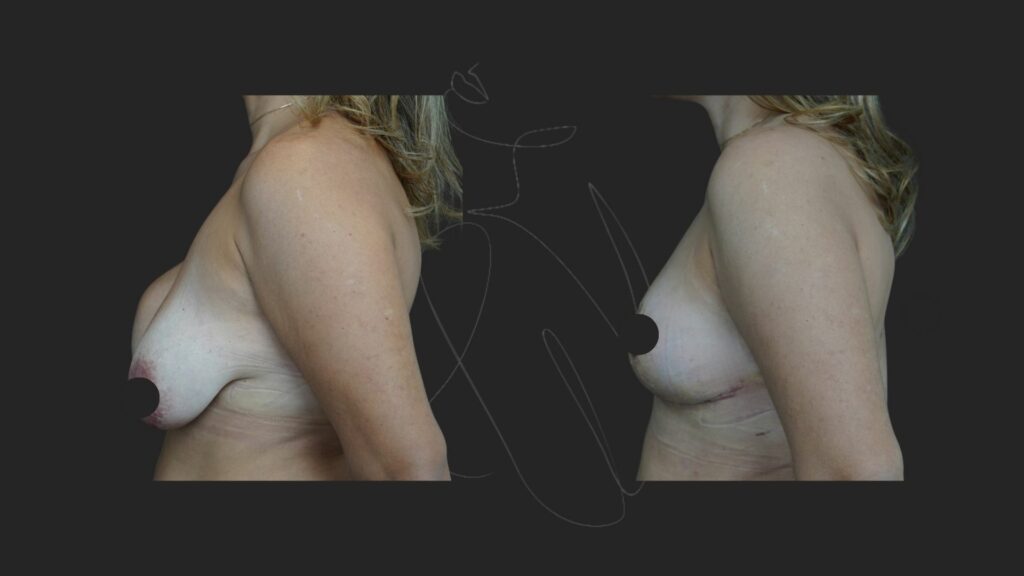
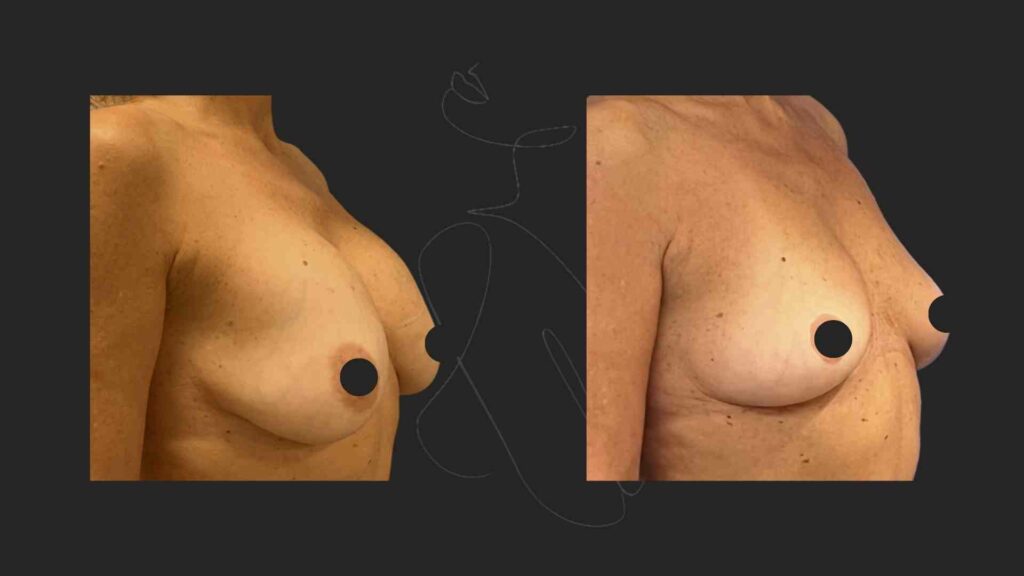
Sizing and profile basics
Implants are measured in cubic centimeters and described by base width and profile (projection). Dr. Wiser fits the base width to your chest first, because an implant wider than your chest wall creates the visible edge and side fullness patients later regret; then profile is chosen for the projection you want. At the consultation you try sizers in a bra so the decision is made on your own frame.
Breast implant longevity and replacement
Implants are not lifetime devices. Many last well over a decade, but rupture, capsular contracture and changing preferences mean many patients will have another operation eventually. The FDA's breast implant information and its page on risks and complications are the primary sources, and worth reading before you choose. Some patients later choose breast implant removal, often with a lift.
2026 updates worth knowing
- Smooth-shell implants remain the standard in the United States following the 2019 recall of certain textured implants associated with BIA-ALCL.
- The FDA requires a boxed warning and a patient decision checklist for all breast implants; you will review and sign the checklist before surgery.
- Periodic imaging of silicone implants remains recommended to detect silent rupture.
- Fat transfer continues to grow as a no-device alternative for modest increases; see fat transfer breast augmentation.
Frequently asked questions
What is a gummy bear implant?
A highly cohesive silicone gel implant. The gel holds its shape and stays together if the shell tears, which is where the nickname comes from. Gummy bear implants feel firmer than standard silicone and are available in round and anatomical (teardrop) shapes.
Do I need MRI scans if I have silicone implants?
The FDA recommends periodic imaging with ultrasound or MRI to check silicone implants for silent rupture, starting a few years after placement and repeating every few years after that. Ask Dr. Wiser for the current schedule.
Which implant profile should I choose?
Profile describes how far the implant projects for a given base width. A wider chest with little tissue usually suits a moderate profile; a narrow chest wanting more projection suits a higher profile. Dr. Wiser fits base width to your chest first, then chooses the profile.
How often do implants need replacing?
There is no fixed schedule, but implants are not lifetime devices. The longer you have them the more likely revision or replacement becomes for rupture, capsular contracture or changing preferences.
Feel the difference on your own frame
At the free virtual consultation Dr. Wiser explains which type suits your tissue and goals; at the in-person visit you try sizers of each. The breast augmentation in NYC page covers the full procedure.
About the author. Dr. Itay Wiser, MD, PhD is Associate Clinical Professor of Surgery at Mount Sinai Elmhurst Hospital. He completed a reconstructive microsurgery fellowship in aesthetic and reconstructive breast surgery at Lenox Hill Hospital and a lymphedema surgery fellowship at Memorial Sloan Kettering Cancer Center, and holds a PhD in epidemiology and public health. He practices at 535 Fifth Avenue in Manhattan.
Medical disclaimer: This article is for general education and does not replace an individual consultation. Recovery times are typical ranges and insurance criteria vary by plan.