

Hair Restoration for Women in NYC: PRP for Thinning Hair
By Sarah Walner, PA-C, lead injector at WiserMD. Medically reviewed by Dr. Itay Wiser, October 2026.
Hair thinning in women is common, often quiet, and usually more upsetting than people around you realize: a widening part, a thinner ponytail, more hair in the brush. The causes are different from men's and often more varied, from hormonal shifts and thyroid conditions to stress, nutrition and the months after pregnancy. Sarah Walner, PA-C starts by finding the cause, then uses PRP or PRF where it can help.
For the treatment itself, see non-surgical hair restoration in NYC.
Signs women notice
- A part that looks wider, especially at the crown.
- A ponytail that feels thinner.
- More hair than usual in the brush, the shower drain or on the pillow.
- Scalp more visible under bright light.
- Shedding that began a few months after a baby, an illness, surgery or a stressful period.
Why women's hair thins
- Female pattern hair loss. Gradual thinning along the part and crown, often with a family history; the most common cause (review of female pattern hair loss).
- Hormonal changes. After pregnancy, stopping birth control, or around menopause. See postpartum hair loss.
- Thyroid conditions and nutritional deficiencies. Low iron, low vitamin D and thyroid imbalance can all cause thinning and are tested for.
- Stress, illness and rapid weight loss. These can trigger temporary shedding a few months later.
- Medications and hair styling. Some medications and tight hairstyles contribute. The article on female hair loss causes explains when to see a dermatologist.
How candidacy differs for women
Men's hair loss usually follows a predictable pattern; women's is often diffuse, spread across the top of the scalp, and can have more than one cause at once. That is why the consultation includes a history, a scalp examination and often blood tests, and why some women are referred to a dermatologist or their physician first. PRP or PRF tends to suit women with pattern thinning whose follicles are still present, and women whose shedding has a treated cause but whose density has not recovered.
Table of Contents
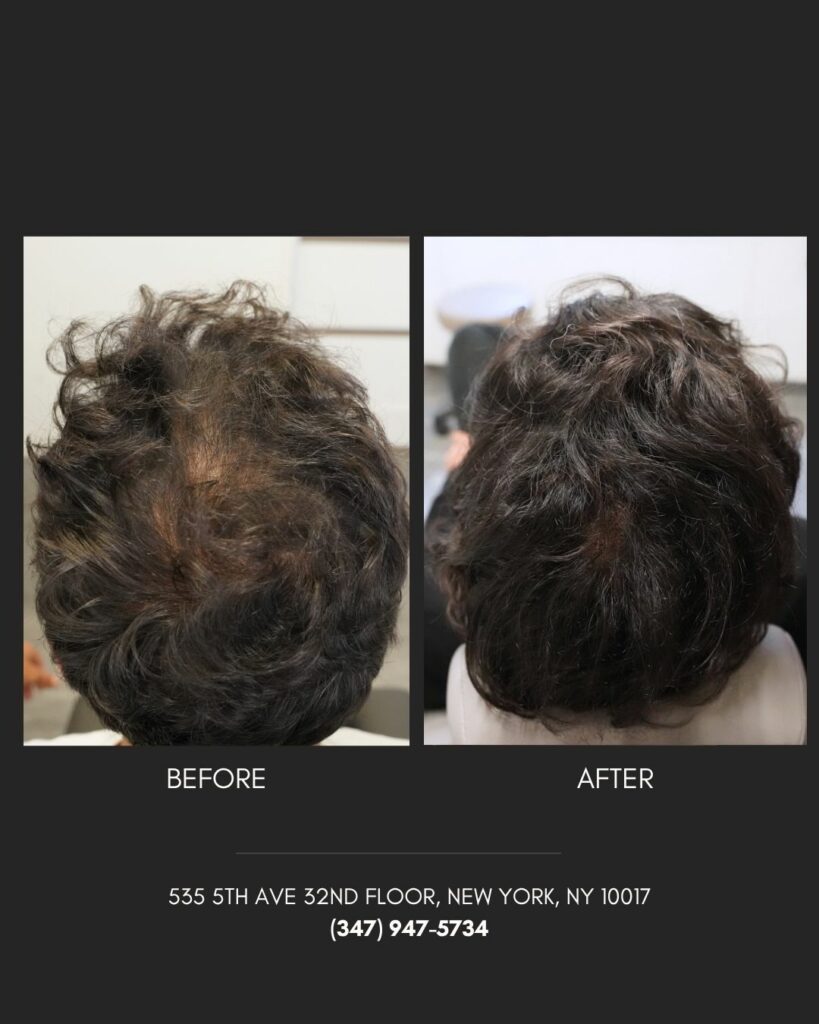
Hair Restoration: Before & After
Why Patients Trust Dr. Wiser

Associate Clinical Professor of Surgery, Mount Sinai Elmhurst

Advanced techniques for natural-looking results

Thousands of successful
procedures
What to expect from treatment
An initial series of three or four sessions about a month apart, then maintenance. Most women notice less shedding first, then gradual thickening over several months; the results timeline explains each stage. Results vary by patient, by the cause and stage of hair loss, and by how consistently the treatment plan is followed. Many women combine PRP with a topical or oral treatment their dermatologist recommends, and Sarah coordinates where needed. Cost is covered in the PRP hair cost guide.
Questions women ask about hair restoration
Why is my hair thinning?
Common causes in women include female pattern hair loss (gradual thinning along the part), hormonal shifts such as after pregnancy or around menopause, thyroid conditions, iron or other nutritional deficiencies, significant stress or illness, rapid weight loss, and some medications. Identifying the cause decides the treatment.
Is PRP effective for women?
For female pattern thinning, often yes, and some research suggests women respond well. For shedding with a medical cause, that cause is addressed first. Results vary by patient, by the cause and stage of hair loss, and by how consistently the treatment plan is followed.
Will I need blood tests?
Often, yes. Sarah may recommend thyroid, iron and other tests, reviewed with Dr. Wiser, before starting treatment, because a treatable cause changes the plan.
Can I have PRP while breastfeeding or pregnant?
Treatment is usually postponed during pregnancy and discussed case by case while breastfeeding. Postpartum shedding often improves on its own; the postpartum article explains when treatment helps.
Start by finding the cause
At the free virtual consultation Sarah reviews your history and the pattern of your thinning, recommends any tests, and explains whether PRP or PRF can help.
About the author. Sarah Walner, PA-C, joined WiserMD in 2024 after receiving her Master of Science in Physician Assistant Studies from Midwestern University. Before her physician assistant studies, she received her Bachelor of Science in Human Development from the University of Wisconsin-Madison. After becoming a certified physician assistant in 2024, Sarah began her career as a plastic surgery PA with Dr. Wiser. She has assisted in a wide range of cosmetic surgical procedures, including body contouring, breast surgery, facelift and blepharoplasty. Sarah is also the lead injector at WiserMD, specializing in natural, non-surgical facial rejuvenation with Botox, filler and microneedling. Every treatment plan is medically reviewed by Dr. Itay Wiser, Associate Clinical Professor of Surgery at Mount Sinai Elmhurst Hospital.
Medical disclaimer: This page is for general education and does not replace an individual consultation. Results and longevity vary by patient and product.